


Violence against women is a serious social issue that affects women’s safety, dignity, and overall well-being. While physical violence is often the most recognized form of abuse, violence can take many other forms that are less visible but equally harmful. Emotional manipulation, psychological abuse, financial control, digital harassment, and sexual violence can affect women’s lives in ways that are not always immediately recognized by others.
In many situations, abuse begins with behaviours that may appear small or harmless. Excessive jealousy, constant criticism, restrictions on personal freedom, and attempts to control everyday decisions can gradually develop into patterns of abusive behaviour. Because these actions are sometimes mistaken for love, concern, or authority, women may find it difficult to recognize the warning signs.
Understanding the different forms of violence against women is essential to identifying harmful behaviour, supporting survivors, and building relationships based on respect, trust, and equality. Recognizing abuse early can help individuals seek appropriate support and prevent harmful situations from becoming more serious.
Understanding the different forms of violence against women
Violence against women includes actions that cause or may cause physical, sexual, emotional, or psychological harm. It can occur within intimate relationships, families, workplaces, educational institutions, public spaces, and online environments.
Not all forms of abuse involve physical injuries. Some involve controlling another person’s decisions, undermining their confidence, restricting their access to money, or using technology to monitor and threaten them.
Different forms of abuse may also occur together. For example, a woman experiencing physical violence may also face financial control, emotional manipulation, and digital surveillance. Recognizing these overlapping behaviours is important because abuse is not always limited to one action or incident.
1. Emotional abuse: when words become weapons
Emotional abuse involves behaviours intended to hurt, humiliate, intimidate, or manipulate another person. Unlike physical violence, its effects may not be visible, making it difficult for others to recognize.
In relationships, emotional abuse may include repeated insults, constant criticism, humiliation, threats, or attempts to make a woman feel worthless. An abusive partner may dismiss her feelings, ridicule her opinions, or repeatedly blame her for problems that are not her responsibility.
Another warning sign is the use of guilt to control behaviour. A partner may say that a woman is selfish for spending time with friends, pursuing her interests, or making decisions independently. Over time, she may begin to feel responsible for keeping the other person happy, even at the expense of her own well-being.
Warning signs people may overlook include:
- Repeatedly making hurtful jokes at a woman’s expense.
- Dismissing her feelings by saying she is too sensitive or overreacting.
- Blaming her for another person’s anger or abusive behaviour.
- Using silence, guilt, or humiliation to punish her.
- Making her feel that she is not good enough or cannot make decisions independently.
Disagreements are a normal part of relationships, but repeated humiliation and manipulation are not healthy ways to resolve conflict. Everyone deserves to express their feelings without being belittled or intimidated.
2. Psychological abuse: Controlling thoughts and behaviour
Psychological abuse involves patterns of behaviour that create fear, confusion, insecurity, or a loss of independence. It may overlap with emotional abuse, particularly when an individual repeatedly uses intimidation or manipulation to control another person’s actions.
An abusive person may attempt to isolate a woman from her friends and family, question her every decision, threaten to harm people she cares about, or make her feel that she cannot manage life without the relationship.
Some perpetrators also use gaslighting, a form of manipulation in which they repeatedly deny events, distort information, or dismiss another person’s perceptions to make them doubt their own memory or judgment.
For example, a partner may repeatedly deny saying something hurtful, even when the woman clearly remembers the incident, or insist that she is imagining problems whenever she raises concerns. When this happens repeatedly, she may begin to question her own judgment and become increasingly dependent on the person causing the harm.
Warning signs people may overlook include:
- Constantly checking where a woman goes and whom she meets.
- Preventing or discouraging her from maintaining friendships.
- Making threats to create fear or force compliance.
- Repeatedly denying events to make her question her memory.
- Making major decisions for her without respecting her wishes.
- Creating an environment where she feels afraid to disagree.
Healthy relationships allow both people to maintain their individuality and make decisions without fear. Concern for a partner’s well-being should never become an excuse to control their life.
3. Financial abuse: Using money as a means of control
Financial abuse occurs when someone uses money or economic resources to restrict another person’s independence. It can happen within marriages, intimate relationships, and family settings.
A woman may be prevented from working, pressured to give up her earnings, denied access to money for basic needs, or forced to explain every expense. In other situations, a partner may take loans in her name, interfere with her employment, or deliberately create financial dependence.
Financial abuse can be especially difficult to identify because couples often make shared financial decisions. However, there is an important difference between mutually agreed financial planning and one person using money to control the other.
When a woman has no independent access to funds, she may struggle to leave an unsafe relationship, find alternative accommodation, or support her children. This can make it harder to seek help, even when she recognizes that the relationship is harmful.
Warning signs people may overlook include:
- Taking a woman’s salary without her agreement.
- Preventing her from working or continuing her education.
- Refusing access to money needed for essential expenses as a means of control.
- Monitoring every purchase while denying her a say in financial decisions.
- Creating debts in her name without informed consent.
- Hiding important financial information to maintain control.
Financial independence can provide women with greater choices and security. Couples can share financial responsibilities while still respecting each person’s access to information, resources, and independent decision-making.
4. Digital abuse: When technology becomes a tool for control
Technology has made communication easier, but it can also be misused to harass, threaten, monitor, or control women. Digital abuse can occur through social media, messaging applications, email, location-sharing tools, and other online platforms.
An abusive partner may demand passwords, read private messages without permission, track a woman’s location, or insist that she respond immediately to every message. Others may use fake accounts to monitor her activities, send repeated unwanted messages, or threaten to publish private information.
Sharing intimate images without consent is another serious form of digital abuse. Threatening to distribute such images to force someone to remain in a relationship or comply with demands can cause significant emotional distress and fear.
These behaviours are sometimes mistaken for signs of affection or concern. However, a person does not have to surrender their privacy to prove their commitment to a relationship.
Warning signs people may overlook include:
- Demanding access to passwords or private accounts.
- Constantly checking online status and questioning delayed replies.
- Tracking location without freely given consent.
- Sending threatening or humiliating messages.
- Impersonating a woman online or accessing her accounts without permission.
- Threatening to share private photographs, messages, or personal information.
Women experiencing digital abuse may benefit from reviewing account security, changing compromised passwords from a safe device, enabling two-factor authentication, and preserving evidence when it is safe to do so. If an abusive person monitors a device, sudden changes may alert them, so safety should come first.
5. Sexual abuse: Violating consent and personal boundaries
Sexual violence includes sexual acts or contact without freely given consent. It can occur in public spaces, workplaces, educational institutions, marriages, and intimate relationships.
Sexual abuse is not limited to physical assault. It may include unwanted sexual touching, coercion, sexual threats, persistent unwanted advances, or pressuring someone into sexual activity through fear, manipulation, or intimidation.
One important misconception is that marriage or being in a relationship automatically gives someone the right to sexual access to their partner. It does not. Consent must be freely given, and a person has the right to refuse or withdraw consent.
Pressure can take different forms. Someone may repeatedly insist on sexual activity after being told no, threaten to end a relationship unless demands are met, or use financial dependence and emotional manipulation to influence a woman’s decision.
Sexual harassment can also occur through unwanted sexual comments, inappropriate messages, or unwelcome conduct in professional and public environments.
Warning signs people may overlook include:
- Ignoring a woman’s refusal or discomfort.
- Repeatedly pressuring her into sexual activity.
- Treating consent as something automatically granted by marriage or a relationship.
- Using threats, guilt, or financial dependence to obtain sexual compliance.
- Touching someone sexually without permission.
- Sharing intimate images or information without consent.
Survivors should never be blamed for sexual violence. Responsibility lies with the person who commits the abuse. Providing respectful support, protecting privacy, and ensuring access to appropriate medical, psychological, and legal assistance are essential steps towards recovery.
6. Physical abuse: recognizing more than visible injuries
Physical abuse involves the use of physical force to hurt, intimidate, or control another person. It may include hitting, slapping, kicking, pushing, choking, burning, or throwing objects at someone.
Some acts of physical abuse leave visible injuries, while others may not. A person may experience physical intimidation through aggressive gestures, blocking exits, damaging belongings, or threatening behaviour intended to create fear.
Physical abuse may also become more frequent or severe over time. Even when an incident does not result in serious injury, it should not be dismissed as harmless or acceptable.
Women may conceal injuries or provide explanations for them because they fear retaliation, feel ashamed, or worry about the consequences of reporting the abuse. Friends, family members, and colleagues should therefore be attentive to changes in behaviour without making assumptions or pressuring someone to disclose personal experiences.
Warning signs people may overlook include:
- Unexplained injuries accompanied by fear or anxiety.
- A partner using physical intimidation during disagreements.
- Blocking a woman’s way or preventing her from leaving a room.
- Throwing objects or damaging belongings to frighten her.
- Threatening physical harm to control decisions.
- Repeated incidents followed by apologies and promises that the behaviour will stop.
Physical violence is never an acceptable response to disagreement, jealousy, or anger. If someone is in immediate danger, reaching a safe place and contacting appropriate emergency assistance should take priority.
Why these warning signs are sometimes overlooked
One of the biggest challenges in addressing violence against women is that abusive behaviour does not always begin with an obvious act of violence. It may develop gradually, with controlling actions becoming more frequent as the relationship progresses.
Social expectations can also influence how abuse is understood. In some families and communities, women may be encouraged to tolerate harmful behaviour to protect a marriage, avoid embarrassment, or maintain family unity. As a result, abusive actions may be dismissed as ordinary relationship problems.
Financial dependence, concern for children, fear of retaliation, and uncertainty about available support can make it difficult for women to speak out or leave an unsafe situation.
It is also important to understand that abuse is not always easy to recognize from the outside. A woman may appear confident and successful in public while experiencing serious difficulties in her private life.
Rather than asking why a woman did not leave or report the abuse sooner, it is more helpful to ask what support, protection, and resources she needs to feel safe.
How to support women experiencing abuse
Recognizing the warning signs is only the first step. Responding with understanding and appropriate support can help women explore their options and make informed decisions about their safety.
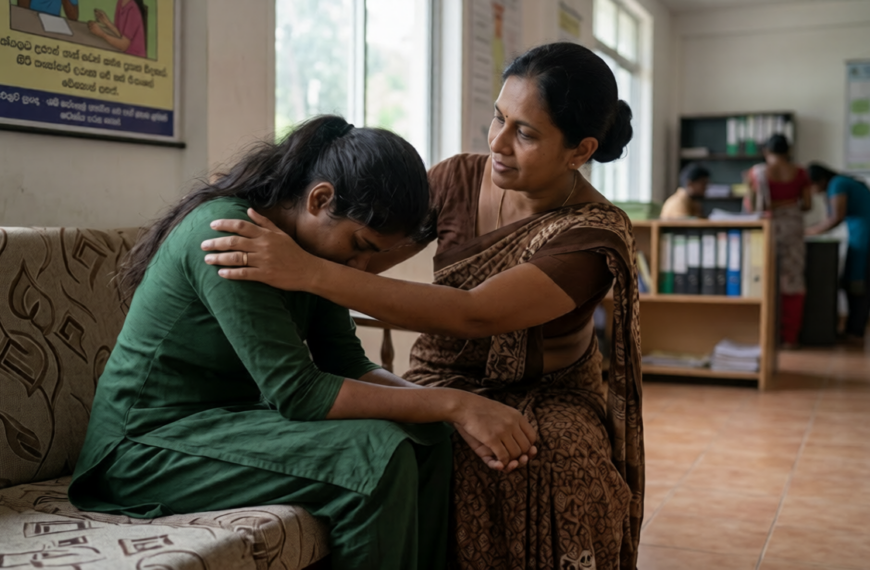
If someone shares an experience of abuse, listen without judgment. Avoid blaming them, questioning their decisions, or pressuring them to take immediate action before they feel prepared. Let them know that the abuse is not their fault and that they deserve to be treated with dignity.
Where appropriate, help them identify trusted people, professional counselling, medical services, legal assistance, or organizations that support survivors of violence. If there is an immediate threat, seek emergency assistance when it is safe to do so.
Prevention is equally important. Families, schools, workplaces, and communities can help by promoting consent, respecting personal boundaries, challenging harmful attitudes, and ensuring that reports of abuse are taken seriously.
In Sri Lanka, women seeking assistance can contact the Women’s Helpline on 1938 for guidance and support. The availability and scope of services should be confirmed before relying on a particular service for urgent assistance.
Conclusion
Violence against women extends far beyond physical abuse. Emotional manipulation, psychological intimidation, financial control, digital harassment, and sexual violence can all undermine a woman’s independence, confidence, safety, and well-being.
Because some forms of abuse are difficult to see, understanding their warning signs is essential. Controlling behaviour should not be mistaken for care, manipulation should not be accepted as love, and violence should never be justified by anger, jealousy, or relationship difficulties.
Creating safer relationships and communities requires awareness, education, accountability, and respect for individual rights. Every woman deserves the freedom to make her own decisions, maintain her personal boundaries, and live without fear of abuse.
By recognizing harmful behaviour early, supporting survivors without judgment, and challenging attitudes that excuse violence, society can take meaningful steps towards a future where women are treated with dignity, equality, and respect.

 By