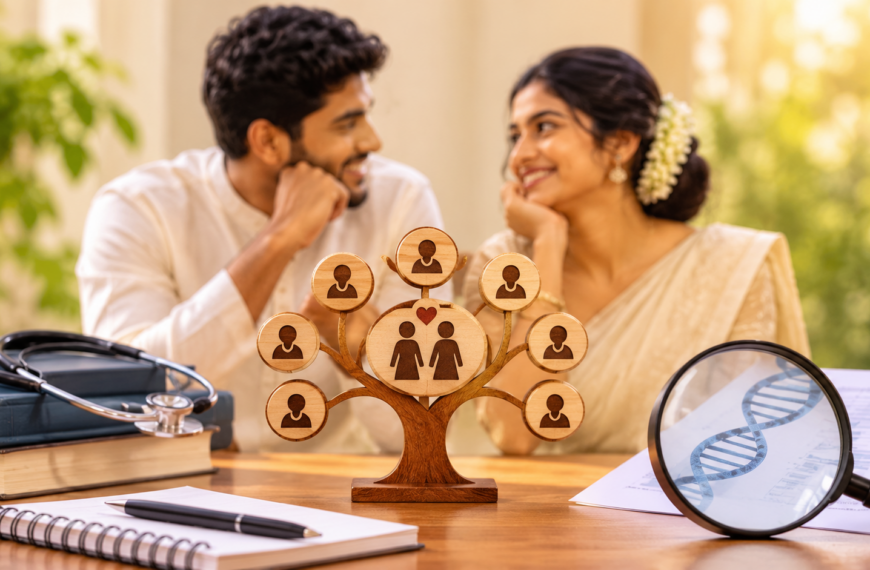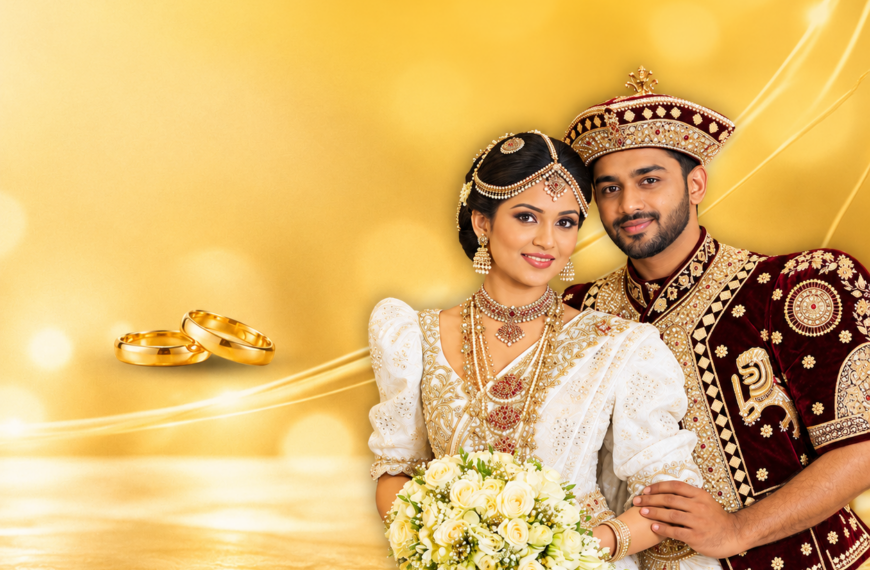

Sri Lankan marriage proposals don’t begin at the Poruwa. They begin much earlier, with horoscopes, family visits and often a trusted go-between known as the kapuwa carrying messages from one home to another. Whether a family follows Kandyan (up-country) or low-country (Pahatharata) customs shapes much of what follows: how the proposal is approached, how the poruwa charithra unfolds, what the manaliyo wear, and how the wedding in Sri Lanka feels on the day.
In this guide, we compare both traditions step by step, from the first proposal to the farewell, so you can understand what your family follows or choose what suits you.
Who are the Kandyan and low-country Sinhalese?
Sinhala weddings are usually described in two main styles. Kandyan (up-country) weddings are closely tied to Buddhist practice and the heritage of the old Kandyan kingdom, and are known for elaborate attire and strict adherence to ritual. Low-country (Pahatharata) weddings keep Sinhala customs but mix in more Western influence, especially in dress and music.
The distinction also has a history. Kandyan families were historically governed by Kandyan law, while low-country families came under Roman-Dutch law, which affected marriage, property and inheritance. Researchers note that the difference, whether real or perceived, was emphasised most strongly during the colonial era, and that intermarriage between Kandyan and low-country families has long gone hand in hand with integration. Today, many couples blend both traditions.
How Sri Lankan marriage proposals work
In most Sinhala families, a marriage proposal is a family matter first and a couple’s decision second. While details vary, the process commonly follows these steps:
The proposal is introduced. It may come through relatives, friends, a family contact or a matrimony service.
Horoscopes are exchanged. Families ask an astrologer to compare the couple’s horoscopes (porondam) before taking the proposal further.
The families meet. If the horoscopes match, the two families meet, and the couple may get to know each other.
The wedding date is set. The astrologer gives the nekath, the auspicious time for the wedding and its key moments.
Astrology is central to both traditions. The nekath guides not only the wedding date but also the timing of the Poruwa ceremony, the ring exchange and even the couple’s arrival at the venue. Many families prefer March, May, June and July as wedding months, although the final date depends on the couple’s horoscopes.
If you’re looking for a partner yourself, you can browse verified Sri Lankan marriage proposals on Poruwa.lk and share horoscope details with the families you connect with.
Do Kandyan and low-country proposals differ?
The steps above are broadly shared across both traditions. The differences tend to appear in family customs and expectations. Historically, low-country families, who followed Roman-Dutch law, more commonly practised hypergamy and dowry, and living in the wife’s home was very rare. Kandyan custom recognised both diga and binna marriage, which determined where a couple lived and what rights followed. Many modern families have moved away from these practices, so it’s worth asking your own elders what your family follows.
The kapuwa: the traditional go-between
Traditionally, a kapuwa is a trusted go-between who carries a proposal from one family to the other. The kapuwa can convey a family’s interest, share details about the families and arrange the first visits, so that neither side faces an awkward direct refusal.
Today, the kapuwa’s role is often taken by relatives, family friends, astrologers or matrimony platforms. If you are researching your own family’s customs, ask older relatives who handled proposals in your family, since the details differ from place to place.
Poruwa charithra: the ceremony and its customs
The Poruwa ceremony is the centre of a traditional Sinhala wedding. It is believed to be older than the arrival of Buddhism in the 3rd century, and it continued through British rule in the 19th century. The poruwa is an elevated, decorated wooden platform that symbolises the couple’s new home. An elder or master of ceremonies guides the ritual, which includes chants, offerings and symbolic gestures, such as tying the couple’s fingers with a thread.
Both Kandyan and low-country weddings use the Poruwa, and everything on it is timed by the nekath. A Kandyan couple interviewed by Life.lk described their Poruwa as strictly guided by the nekath for each action, and noted that arranging a truly traditional wedding is difficult because of the many cultural influences today.
The poruwa charithra, the customs and rituals performed on the platform, can vary by family, region and style. Kandyan weddings usually keep more of the older ritual elements, while low-country weddings are more likely to treat the Poruwa as one part of a wider, more modern celebration.
The manaliyo: attire and jewellery
The manaliyo, the bride and groom, are where the two styles look most different.
Kandyan bride and groom
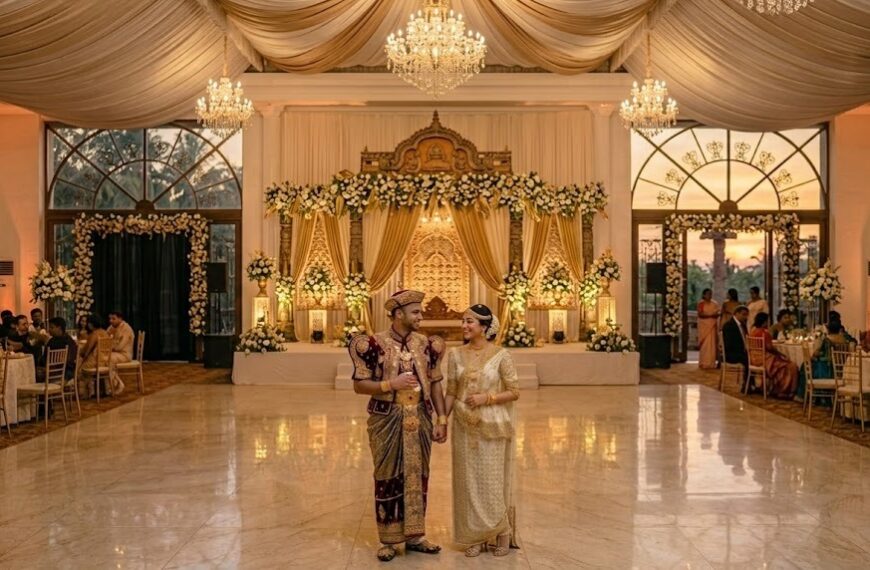
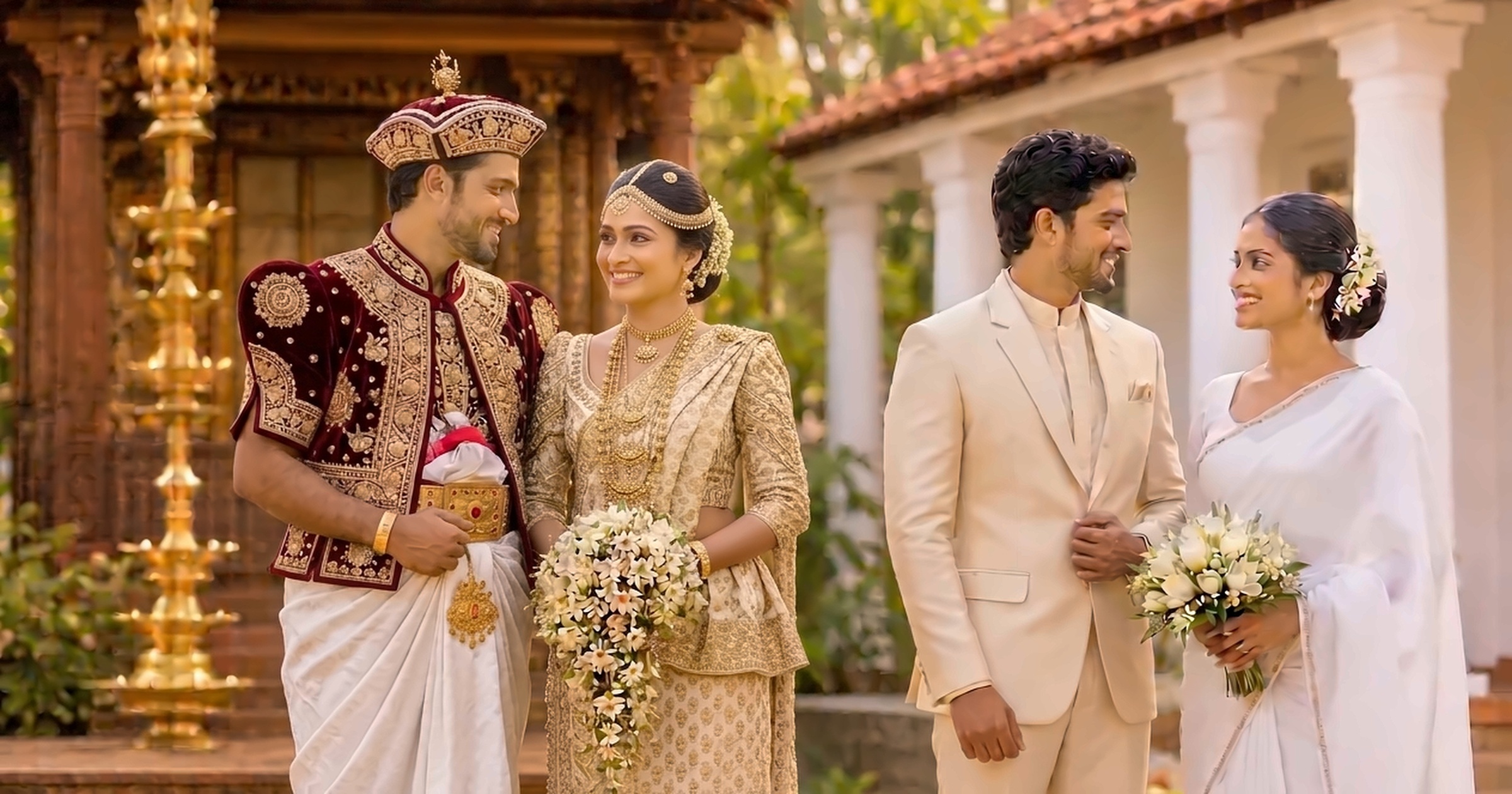
The Kandyan bride traditionally wears the Osariya, a graceful saree style in soft, light shades, decorated with pearls, beads and stones. Some brides add Mangala kinkini (auspicious wedding bells). She also wears an elaborate set of gold jewellery, often passed down through generations to symbolise legacy and prosperity.
Most Kandyan grooms wear the Nilame costume, an outfit historically linked to royalty and high-ranking officials. It comes in rich colours such as maroon, green, blue, red and brown, with gold-thread embroidery in motifs like lions, swords, swans, phoenixes and floral strands, worn with a matching sarong and a crown-like hat.
Low-country bride and groom
Low-country brides tend to wear a simpler saree with Western influence, often with a delicate silk veil and minimal jewellery. The overall look is more modest and modern. Many low-country grooms choose a suit or a more contemporary outfit, but styles vary by family, so check with your own family and bridal dresser.
Kandyan vs low-country wedding: side by side
| Kandyan (up-country) | Low-country (Pahatharata) | |
| Overall feel | Royal heritage, strict ritual | Sinhala customs with Western influence |
| Bride’s saree | Osariya with pearls, beads and stones | Simpler saree, often with a silk veil |
| Jewellery | Elaborate gold set, often an heirloom | Minimal and elegant |
| Groom | Nilame costume with a crown-like hat | Often more contemporary |
| Historical law | Kandyan law | Roman-Dutch law |
| Historical customs | Diga and binna marriage | Hypergamy and dowry more common |
What a wedding in Sri Lanka looks like today
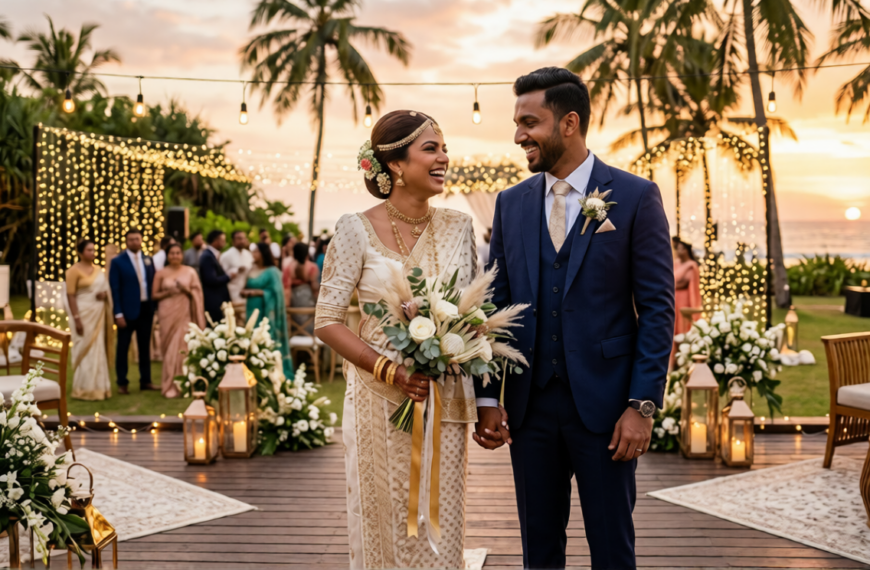
Most couples now choose a blend of both styles. A typical wedding may include a mini procession with drummers and dancers, where the bride’s brother traditionally pours water over the groom’s feet and receives a ring or token in return. The Poruwa ceremony follows, then a feast and tea table with kiribath and sweetmeats such as kavum, kokis, aluwa and asmi. The day ends with speeches, often a first dance, and a farewell where the couple worships their parents and leaves, once by bullock cart and now usually by car. Many couples also move the celebration from the bride’s home to a hotel or scenic venue while keeping the traditional core.
How to choose between Kandyan and low-country customs
Ask both families what they follow. Elders often know the specific customs.
Consult your astrologer about the nekath and the order of rituals.
Meet your Poruwa master or planner early, since ritual elements and costumes need time to arrange.
Decide what matters most to you. Many couples keep the Poruwa and key rituals while choosing outfits and music that suit them.
Plan your budget. Kandyan outfits and jewellery sets can cost more than a simpler look, so ask vendors for quotes.
Frequently asked questions
How do Sri Lankan marriage proposals work?
A proposal usually starts through family, friends, a go-between or a matrimony service. Families exchange horoscopes, meet if the match is promising, and then set the wedding date with an astrologer.
What is the difference between Kandyan and low-country weddings?
Kandyan weddings are more ritual-heavy and known for the Osariya and the Nilame costume. Low-country weddings keep the Poruwa but usually have a more modest, Western-influenced style.
What does a kapuwa do?
A kapuwa is traditionally associated with carrying messages and proposals between families. Today relatives and matrimony platforms often play that role.
What is the poruwa charithra?
It refers to the customs and rituals of the Poruwa ceremony, performed on the decorated platform under the guidance of an elder and timed by the nekath.
Who are the manaliyo?
Manaliyo is the Sinhala word for the bride and groom.
Can we mix Kandyan and low-country styles?
Yes. Many couples do, for example, Kandyan outfits for the Poruwa and Western attire for the reception.
Final thoughts
Sri Lankan marriage proposals are the first step of a journey that moves through horoscopes, family meetings, the kapuwa’s traditional role and finally the Poruwa. Kandyan and low-country traditions share the same foundations, but they differ in attire, ritual detail, and family customs. Whichever style you choose, understanding where each custom comes from helps you honour it in your own way.
Ready to start? Explore Sri Lankan marriage proposals on Poruwa.lk through https://www.poruwa.lk/ and connect with families who value the same traditions as you.
Read more articles related to Sri Lankan wedding traditions: https://www.poruwa.lk/blog/category/sri-lankan-wedding-traditions/

 By