
“We already know the family, so there will be no surprises.” Many Sri Lankan parents say this when a proposal comes from a relative, and it is easy to see why. Trust, shared customs and a familiar family can make the decision feel safe. But when it comes to children’s health, knowing the family is not the same as knowing the facts.
Whether you are going through the vivaha yojana process or looking at proposals on your own, it helps to understand how marriage between relatives works in matrimonial Sri Lanka today: how common it is, why it happens, and what it can mean for the next generation.
This article is not meant to shame anyone. Most children born to related parents are healthy. The goal is to help you decide with good information.
Matrimonial Sri Lanka: how couples are marrying in 2026
The 2024 Census, whose final report came out in 2026, shows that marriage is changing. 41.8 percent of the population has never married, compared with 30 percent in 2012. The average age at marriage is now 29.2 years for men and 25.6 years for women, up from 27.2 and 23.4 in 2012.
Couples are marrying later, usually after finishing their education and starting a career. That gives families more time to talk, ask questions and run health checks before the wedding.
How common is cousin marriage in Sri Lanka?
Reports published in October 2025 in the Sunday Times and by AsiaNews, based on university research, brought this topic back into the news. They found that about 7 out of every 100 married couples are blood relatives, mostly cousins or close relatives.
The picture is very different between communities. The figure is about 4% among Sinhalese and Muslims, but reaches almost 25% among Tamils. That means roughly one in four Tamil couples are related.
The experts quoted explain that the reasons are often practical. Cousin marriages keep property “in the family,” and marrying within the family circle helps prevent land disputes over inheritance. Officials also say marriages between close relatives are mainly based on land, especially land inherited from ancestors. Trust in a known family and shared customs also play a part.
The reports stress that this is not a national crisis. Cousin marriage is not widespread at the national level, but it is deeply rooted in some communities.
Here is what health officials reported in 2026:
When a couple are related, they are more likely to carry the same hidden genetic variants. In Sri Lanka the best-known example is thalassaemia, an inherited blood disorder. Among families that have children with thalassaemia, 15% of the parents were related by blood, and among Tamil thalassaemia families the figure was close to 50%.
Here is what health officials reported in 2026:
Around 2,500 people are living with thalassaemia and receiving ongoing treatment.
Between 45 and 60 children are born each year with severe forms.
An estimated 3% of the population carries the thalassaemia gene. Another report gives around 500,000 carriers, which shows how many people may not know they are carriers.
Many carriers have no symptoms. When two carriers have a child, there is a one-in-four chance of severe thalassaemia and a 50% chance that the child becomes a carrier. Children with the disease need regular blood transfusions throughout their lives and expensive medication to protect the heart and liver.
It is important to keep this in proportion. Most children born to cousins are healthy, but when a rare disorder like this already exists in a community, the risks can increase with each generation. A person can also carry the trait without being related to their partner, so screening matters for every couple.
Good news: testing is simple
Screening is available at government hospitals across the country, and a routine Full Blood Count test can help doctors identify possible carriers for further tests. Doctors say the test is accessible and relatively inexpensive, and it can be done before marriage or pregnancy. If both partners are carriers, doctors can give advice and options.
Experts also say banning cousin marriage is not the answer. Bans only create silence, secrecy and resentment. The better approach is open information and testing before marriage. Researchers add that a national “safe marriage” prevention programme running since 2007 has not reduced the number of thalassaemia major births. Awareness helps only when couples act on it, and the best time is before the engagement.
Evidence from a larger international study
The Born in Bradford study in the UK has followed more than 13,000 children, and about one in six have parents who are first cousins. It reports that a child of first cousins has about a 6% chance of inheriting a recessive condition, compared with about 3% in the general population. Researchers are also studying whether there are wider effects on development.
That study involves a different community, but the biology is the same for everyone. Even with cousin parents, about 94 in 100 children do not inherit such a condition.
What Sri Lankan families can do
- Get a blood test before the engagement. Ask for a Full Blood Count at a government hospital. If it suggests a carrier, doctors will advise on further tests. Do this for every proposal, whether the person is a relative or a stranger.
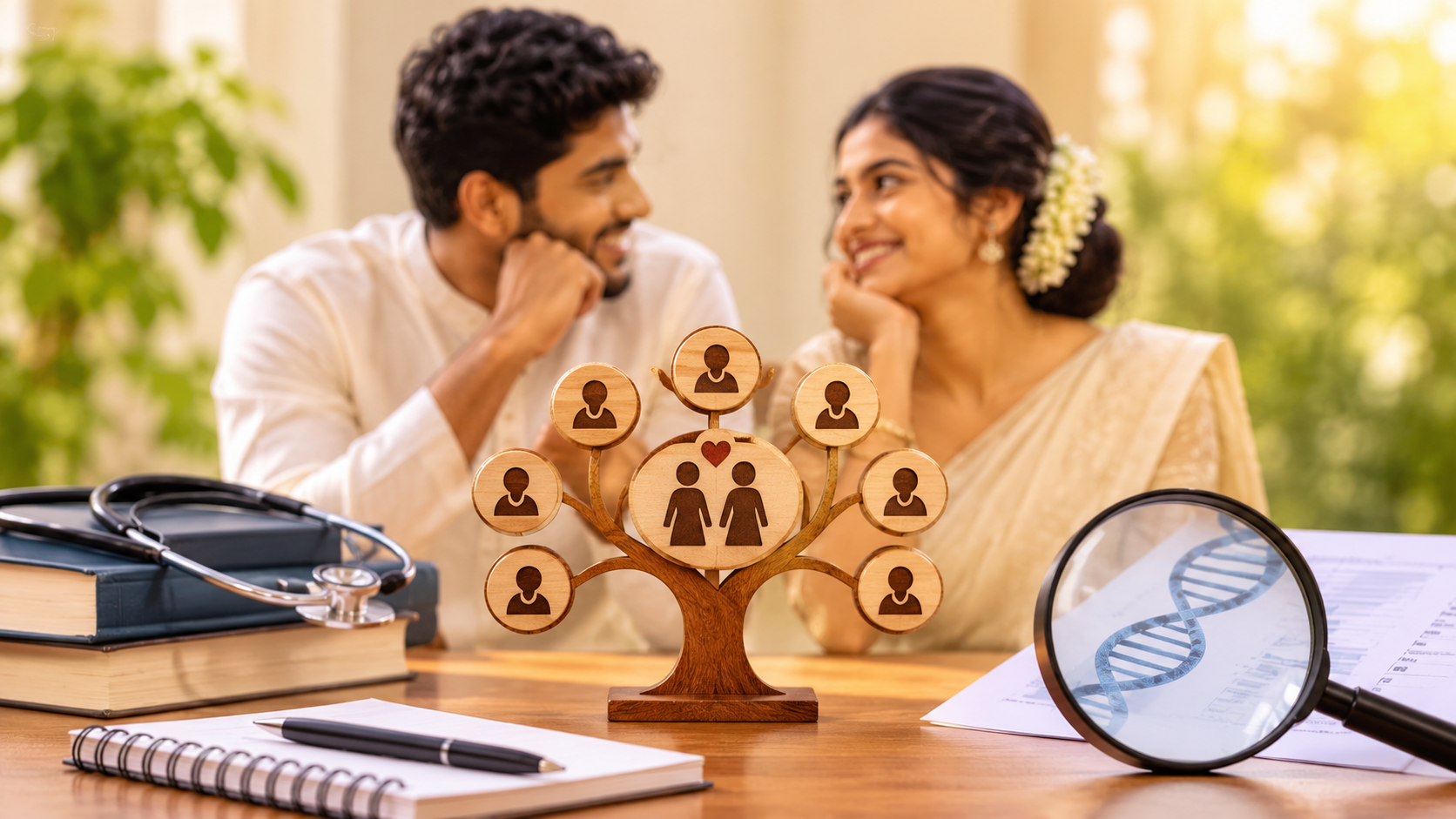
- Speak to a doctor or genetic counsellor. If the proposal is between relatives, ask about the family health history and whether further tests are advised.
- Be honest about family health. Share conditions such as thalassaemia, diabetes, heart disease and hearing problems openly. Hiding them helps no one, least of all the future children.
- Don’t let land or pressure decide alone. Property and tradition matter, but so do the couple’s own wishes and the health of their future children.
- Widen your search. Today, trusted matrimony Sri Lanka platforms and marriage proposals online let families review Sri Lankan wedding proposals from across the island and abroad, with details on education, career and values. Looking beyond the family does not mean rejecting tradition. It can simply mean choosing with more information.
Frequently asked questions
How common is cousin marriage in Sri Lanka?
Reports from October 2025, based on university research, say about 7 in 100 married couples are related by blood. The rate is around 4% among Sinhalese and Muslims and almost 25% among Tamils.
Is cousin marriage dangerous for children?
Most children of cousins are healthy. The risk of inherited conditions is higher, though, and thalassaemia is the main concern in Sri Lanka. A blood test before marriage is the simplest precaution.
What test should we do before marriage in Sri Lanka?
A Full Blood Count (FBC) at a government hospital can help doctors identify possible thalassaemia carriers for further tests. Talk to a doctor about your family history too.
What is the average age of marriage in Sri Lanka?
According to the 2024 Census, it is 29.2 years for men and 25.6 years for women.
Can two thalassaemia carriers have a healthy child?
Yes. Each pregnancy has a one-in-four chance of severe thalassaemia, a 50% chance the child is a carrier, and a 25% chance the child is unaffected. A doctor or genetic counsellor can explain the options.
Final thoughts
Cousin marriage is a personal and cultural matter, and no one should be judged for it. The experts’ message is simple: replace silence with information. Whoever you marry, a blood test and an honest conversation with a doctor before the wedding are small steps that protect the next generation.
This article is for general information and is not medical advice. Please consult a doctor.
Looking for a partner? Create your free profile on poruwa.lk and browse verified proposals today.
Browse verified Sri Lankan wedding proposals – https://www.poruwa.lk/search

 By