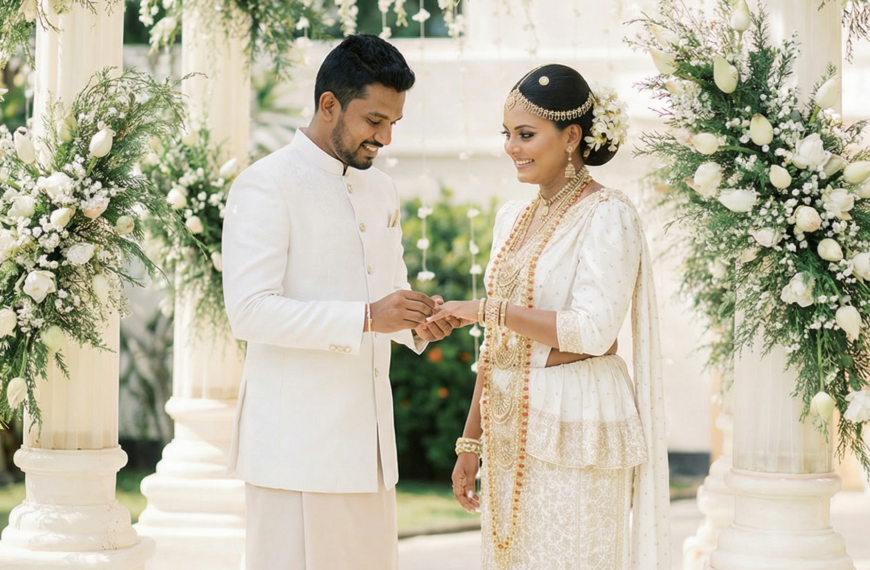
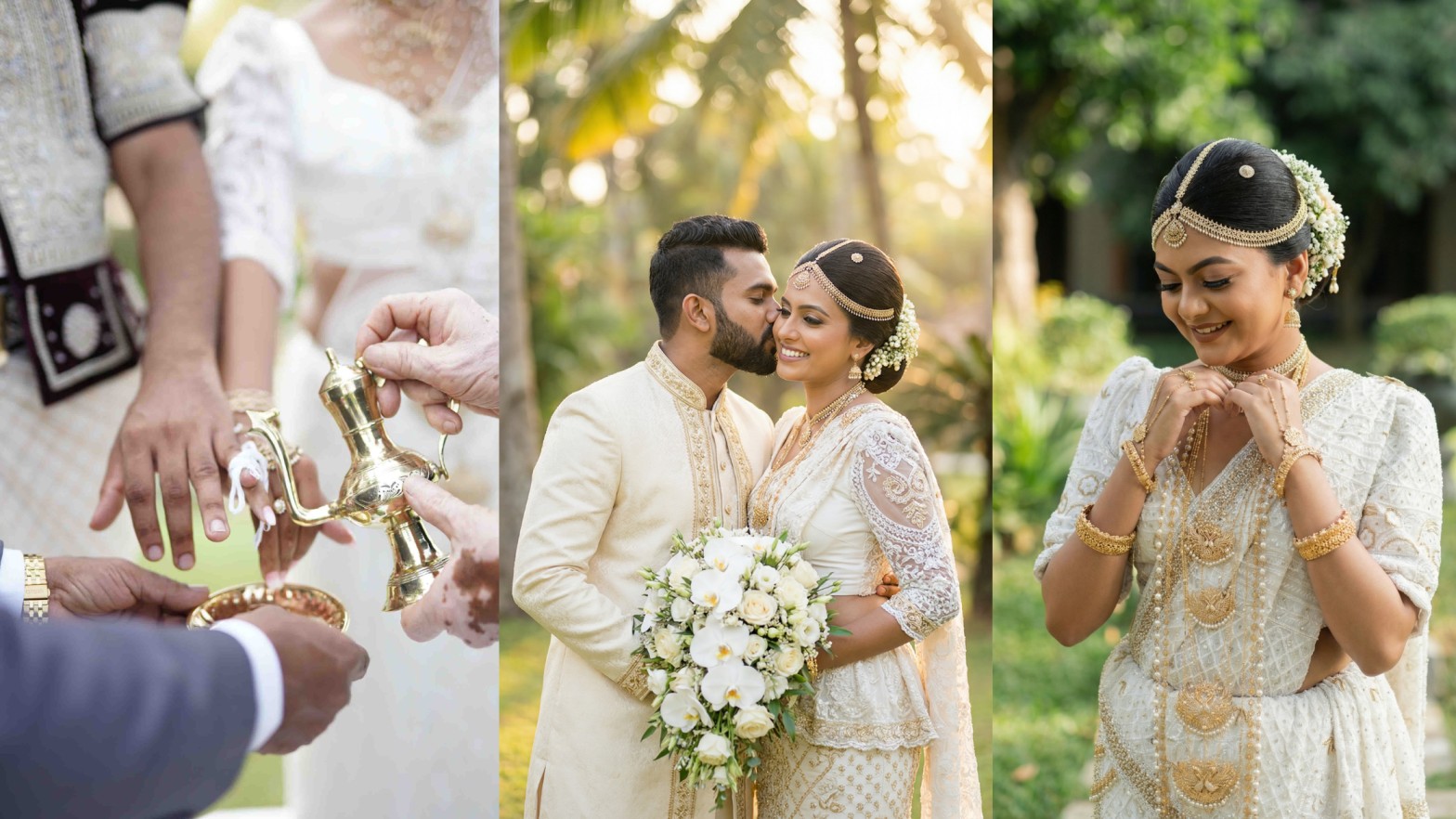

Sri Lankan weddings are admired around the world for their rich traditions, cultural beauty, and meaningful rituals. While many people recognize the elegant bridal attire and grand celebrations, it is the unique customs and traditions that truly make Sri Lankan weddings special. These traditions have been passed down through generations and continue to hold deep cultural, historical, and symbolic meaning.
Although some of these customs have adapted to modern times, their essence remains the same, celebrating the union of two individuals and two families. Many couples find their perfect match through trusted Sri Lankan matrimonial services like Poruwa.lk, where they can explore wedding proposals and connect with Sri Lankan brides.
Here are some interesting traditional rituals in Sri Lankan weddings, including insights relevant for Mangala Yojana and other matrimony celebrations:
Choosing the wedding time according to astrology in Sri Lankan marriage traditions
In Sri Lankan culture, astrology plays an important role in life events, even the wedding was decided by a marriage proposal marriage proposals. The date and exact time of the wedding ceremony are often selected according to an astrologer’s guidance. These moments, chosen carefully, are believed to bring good fortune, harmony, and prosperity to the couple’s married life.
Breaking a coconut for good luck in the poruwa ceremony & Sri Lankan matrimony traditions
Some families break a coconut before starting wedding activities. This ritual is believed to remove obstacles and invite blessings, symbolizing positivity and good luck for the couple as they begin their journey together.
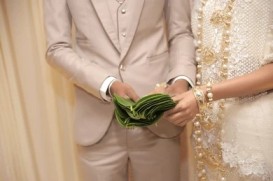
Exchanging betel leaves between families in the poruwa ceremony & Sri Lankan matrimony traditions
The exchange of betel leaves represents respect, acceptance, and the union of two families. This gesture shows mutual agreement and goodwill, reflecting the cultural depth behind marriage proposals in Sri Lanka.
Standing on the poruwa ceremony stage in traditional Sri Lankan wedding rituals & matrimony traditions
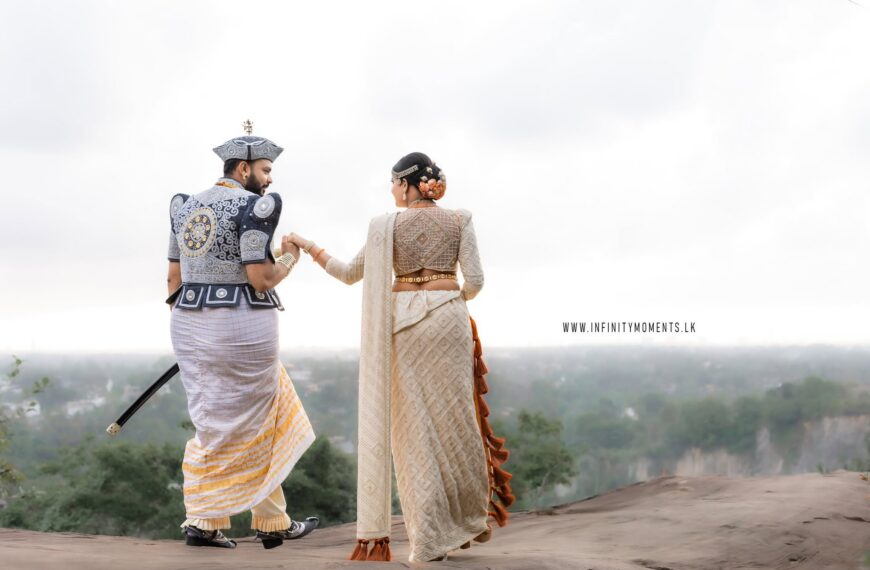
A key feature of traditional Sri Lankan weddings is the Poruwa Ceremony. The bride and groom step onto a decorated wooden platform, the Poruwa, at an astrologically chosen time. Here, meaningful rituals are performed to bless the couple and officially start their married life. This ceremony is central to many Mangala Yojana services and wedding proposals.
Tying the couple’s little fingers with a thread in the poruwa ceremony tradition & Sri Lankan matrimony rituals
During the Poruwa ceremony, tying the little fingers of the bride and groom symbolizes their lifelong bond, unity, and commitment. This gesture emphasizes the sacred nature of marriage proposals and Sri Lankan matrimony traditions.
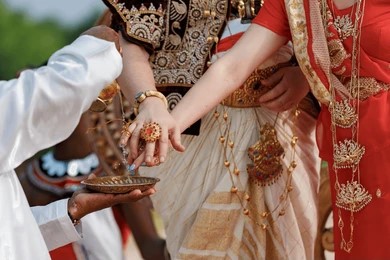
Exchanging betel leaves between families in the poruwa ceremony & Sri Lankan matrimony traditions
Lighting an oil lamp at the wedding symbolizes the beginning of a new life filled with hope, prosperity, and happiness. It represents bringing light and positivity into the couple’s future. Many Mangala Yojan weddings continue to follow this cherished ritual.
Showering the couple with rice or flower petals in Sri Lankan matrimony celebrations
Guests often shower the newly married couple with rice grains or flower petals, wishing them prosperity, joy, and happiness. Modern Sri Lankan weddings prefer flower petals, adding elegance to matrimonial ceremonies.
Washing the groom’s feet in traditional Sri Lankan wedding rituals & matrimony customs
In some traditions, the bride’s family, often the younger brother, washes the groom’s feet before he enters the wedding venue. This act symbolizes respect and warmly welcomes him into the family, a gesture commonly seen in Mangala Yojana services and Sri Lankan wedding proposals.
Sharing the first meal together in Sri Lankan wedding traditions & matrimony rituals
After the ceremony, the bride and groom may feed each other a small piece of food or a sweet, symbolizing love, care, and the promise to support one another.
These Sri Lankan wedding traditions beautifully reflect the country’s cultural identity and the respect Sri Lankans have for their heritage. Whether couples connect through Mangala Yojana or a marriage proposal Sri Lanka these customs remain deeply cherished. Even as modern influences shape weddings, the essence of matrimony, marriage proposals, and Sri Lankan bridal customs continues to honor traditions passed down through generations.

 By
By